Sunday, February 21, 2016

What Keeps You Coming Back

It is Sunday morning before we head back to school from our February break. I know students and teachers alike are fighting that knot in our bellies as we gear up for Monday morning. I am choosing this moment to reflect back on a day last month where I and my colleague had the incredible opportunity to take a group of 21 (we had 22 but one sprained her ankle the night before our trip) students along with a couple of parents to volunteer at the St. John's/St.Ann's Outreach Center to serve lunch. 


We gathered at the front entrance to wait for our bus. I used it as a photo op before we headed out. You can see the excitement on each of my 7th graders' faces. Only two in our group had volunteered here before, so we were all looking forward to see what we had in store for us. I should mention that spots for this trip filled up quickly. I had to turn away students who wanted to volunteer.


We headed into the building bringing with us additional donations of hats, gloves and blankets. One of our parents had offered these items, which were collected via a Red Cross drive. We were so happy to be able to not only donate our time but items that are necessary during any northeast winter.


The board announced our arrival, so I quickly grabbed Sreehitha and Nicaya, our two veteran volunteers, for our photo. These two were so excited to be returning to serve lunch. They kept telling about how amazing the people are and how much fun it was to talk and get to know them. Their enthusiasm made us all feel at home at St. John's.


And then there was Cookie. Gloria Towle-Hilt is a retired FMS teacher who started these trips to the soup kitchen to volunteer.  She now serves on the GCSD BOE. She greeted us all and gave us some background on the program. I was blown away to learn that FMS has been bringing students to volunteer for 25 years! I think we all felt very proud to say that we were now part of that history.


We got right to work. In preparation for the 200 people we would be serving, we were quickly shown how to set up each table. 


Each table needed placemats, condiments, and a centerpiece. Cookie reminded us again and again that the main goal was to make the diners feel welcome. They try to make the experience that of a real restaurant: something the diners aren't able to afford.


As the final touches were put on each table, I looked around and was so impressed with how serious the kids were taking the work. Even being here for 20 minutes, they took ownership over each task and wanted to do their very best.
                                       

We sat down once the tables were set up so Cookie could explain how the various responsibilities while serving. She is joined in this photo with Chris the chef from Druthers Restaurant. Druthers has committed to donate the meal to St. John's whenever FMS students are volunteering to serve. Another very proud moment!
                           

As Cookie spoke, she stressed again the importance of making the diners feel welcome. Our number one job was simply to smile. Looking at my kids and the grins they already had, I knew they would not let her down!
                                          

Next we determined partners for serving each of the 10 tables, who would dish out food and who would clean tables as new diners arrived. I think everyone was happy with their jobs. And while everyone didn't get the partner they asked for, I used it as an opportunity to remind the kids that today is not about us. Not to mention it gave them a chance to make a new friend.


Natalie and Jayden did a great job manning the salad station. They made sure salad bowls were ready to be served so that no one had to wait.


We were very lucky to have two parents volunteering with us as well! Mrs. Clancy and Mrs. DiCaprio plated the main course. It was all hands on deck.


We were so moved by all the different people and stories that we heard during our time serving. One image that struck many of us were the diners who carried all of their belongings with them (as seen in this photo). It made real for us the struggle of the homeless. Each one of us felt humbled and knew that we all have so much to be grateful for.


This woman, who I will refer to as Z, was in awe of her servers Shannon and Camila. She made sure to call me over to say how impressed she was by these two young women. Z shared her own story: how she had been homeless for many months, how she was fighting to gain custody of her younger brother after losing her mother, and her dreams of starting an organization to help those in need. She wanted to be able to use her own story to make a difference in the lives of others. So inspiring!


As our diners became fewer and fewer, we began the process of cleaning up and breaking down tables. Our students continued to work diligently. Their smiles, too, remained (as seen in this photo of Meghan), and we all felt a kinship in our work. A bond had been formed through our time serving together. We all knew this had been a special day.


Mrs. Sittig and I are joined here with Cookie as we thanked her again for the experience she gave not only our students but us as well. On the bus ride home, I quickly emailed the Community Service Club supervisor, Mrs. Cahill, to let her know that we had a wonderful day...and to ask when our team could volunteer again.  For I know that these are the experiences that keep us coming back each day to teach. While it is great to share novels with kids and encourage them as writers, being able to give them a day like this one is so powerful. I wish that we made it more of a priority in public schools to not just share knowledge but to give kids experience in the world, especially places that are outside of their day-to-day lives. I am very grateful for days like this one and will make it a priority to seek out more ways to carve out time to enrich my students' lives.

Don't take my word for it! Check out these blog posts by some of our students who volunteered:

Saturday, November 14, 2015

When The World Knocks On Our Classroom Door

The tragedy that befell Paris, France, Friday night cast a dark shadow across the globe. You could feel the collective human fear grip us all. As a mother of two young girls, I had to find a way to tune it out and protect them from the violence that was too much for their too-young ears. We cuddled up on the couch and got lost in a movie.

Today we continued in that vein and went to the movie theater to see The Peanuts Movie. I was taken by surprise as Snoopy took to the skies to fight the infamous Red Baron over the French countryside. One scene showed them battling over Paris, around the Eiffel Tower, as Snoopy's doghouse was sprayed with bullet holes. You could hear in the silence of the theater as the adults all held their breath.
So as I look to heading back to my classroom on Monday, I know that the terror in Paris will follow me there as well. It was true after Columbine, 9/11, and Sandy Hook. Teachers everywhere will be preparing for how to talk with students about the horror that took place Friday night. My students and I are reading The Giver, a sci-fi dystopian novel that asks, What if we isolated ourselves from the rest of the world, from our history, from our emotions? In times when human beings demonstrate brutality in a way that is unfathomable to most of us, it is likely that some of my students will wonder if Jonas' community might be onto something. The Community is without problems or pain, terror or fear, destruction or despair. The images from Paris or Beirut or Baghdad make it seem easy for us to relinquish ourselves and our rights as humans that many of us take for granted anyway. 

Prior to starting our study of The Giver, my 7th graders explored what citizenship means. We identified four pillars to help us define the concept: truth, justice, responsibility, and equality. We talked about how citizenship works in our society. We read various picture books, examined dystopias depicted in various commercials and listened to song lyrics with dystopian protagonists. Finally, we studied the short film 2081, based on Kurt Vonnegut's short story masterpiece Harrison Bergeron. We watched as America had devolved into a dystopia in the name of Equality. Harrison rebels against the government, that handicaps citizens to ensure no one is extraordinary, and sacrifices himself in order to expose the truth of their society. Before he is shot and killed, there is a moment where we see his graffiti stencil that reads, Live free or die for death is not the worst of evils. As my students grapple with their own fears growing up in a time where evil is seen all too often, I want to focus their thinking around this notion that Harrison Bergeron tried to express to his fellow citizens.

That when we allow fear to force us into a retreat from our freedoms, our rights, our democratic culture, we do not honor those lives that have been lost. Events like these should remind us to be more vigilant about defending our freedom. When we allow ourselves to be swallowed by our fear, we end up losing those parts of life that are most precious.

The chapters in The Giver that we will read together this week will have us watch Jonas as he comes to understand the truth of his Community, the lack of justice when you don't allow people the freedom to choose, the false sense of responsibility created when no one feels anything, and how equality is hollow when Sameness is the culture.  Literature allows us to talk about ourselves and reflect on both the best and worst in society. So while, talking about the state of our world with my students is never easy, I feel blessed to have a lens like Lois Lowry's brilliant novel to help us gain perspective on overwhelming events like those of this weekend. Good luck to all my colleagues this week as we face yet another tragedy, hold our students' hands, listen and teach.


Friday, October 9, 2015

On A Positive Note

Talk to any teacher, this first month of school has been a stressful one. Instead of launching into the reasons why, I wanted to revel in the positives of this week. And when there are positives to hold on to, they come from one of two places: colleagues or students, and if I am lucky a combination of both.

Yesterday at my team meeting, I was lamenting the fact that the rocking chair in my classroom was in disrepair. The chair was a gift from my sister given to me before the birth of my first daughter, Jane. It sat in my girls' room and was used to nurse, rock and cuddle my babies until they became too big for us to sit together comfortably. When I returned to teaching after my maternity leave, Jane was 3 and Sammy 2, I brought my rocking chair with me into Room 356. It was a lovely reminder of my kids while offering a comfy option for my other kids', my students', to read in.


So for the past five years, many a 7th grader has sat in that chair. And due to extreme use, the bottom crossbars secured to the rockers have broken. I explained to my teammates that I was worried it might become unsafe. My teaching assistants (thanks, Mrs. B and Mrs. P!) without missing a beat suggested I ask the technology department at FMS and explained the tools and word working that students learn in tech class. So once we finished the meeting, I headed back to my room and emailed the tech department attaching photos of the condition my rocking chair was in and wondering if there was anything they could do to repair it. Within 20 minutes, I had a reply from Mr. Ball saying, of course, he would and to send the chair down. I was so happy! I planned on walking it downstairs after school but didn't get the chance. 

Not an hour later, Mr. Ball appeared in 356 and swiftly rescued my chair. We had never talked about how long it would take. I didn't care. The thought that it would be repaired was all I could think about.  I imagined in a couple of weeks having my chair back without the bottom looking as though it would fall apart. And not an hour after he had rescued the chair, Mr. Ball had returned with it!  He instructed me not to allow anyone to sit it in it until tomorrow, I showered him with thanks and as quickly as he had arrived, he was gone. I was stunned as I looked at the rocking chair and saw that it was as good as new.  You couldn't even tell that it had been broken.  Colleagues are good like that. When someone needs help or reaches out, you almost always can be sure that you will find the support you need. From my teammates who listened and helped me problem solve to Mr. Ball volunteering his time and expertise to save my chair, I am truly lucky to have colleagues who care.


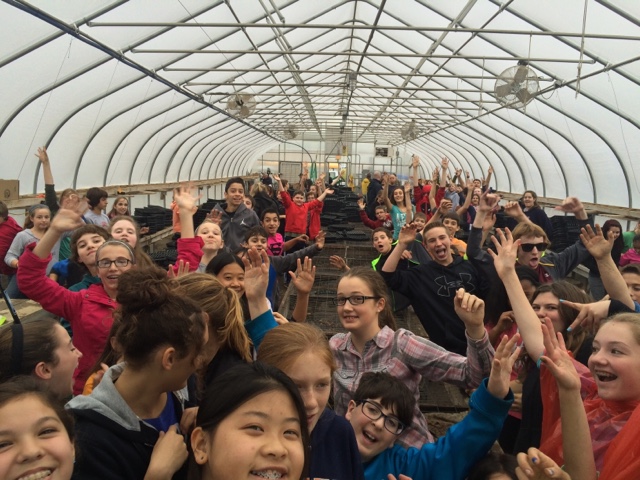
The day following all of this, my team was able to volunteer our time by taking a field trip to the Patroon Land Farm, which is an organic farm that donates all the food it grows to the Regional Food Bank. Each year our team travels to the farm to bond and do a bit of good.  While for our past trips we have been blessed with beautiful weather, today was not one of those days. Instead of working in the fields harvesting vegetables, we were relegated to the greenhouse as the rain poured down outside. We were tasked with separating seedling trays.  As you can see below, there were thousands of them!


The work was messy. The trays were obviously dirty and wet. While we never stepped in the fields, you would never know by looking at us. Dirty hands, fingernails, even a few cuts from the plastic trays as prying the trays loose was challenging at times. This was not an easy job. Some members of the team worked non-stop, always looking for another stack to separate. Some had a hard time focusing on the same task for an extended period of time and were distracted by the excitement of the driving rain and the temptation of playing around with the mud. 

As you can see, Anthony worked extremely hard!
After about thirty minutes of working, students began to ask if this was all we would be doing. I shrugged but added that we sadly couldn't go outside because of the rain. So we continued separating and stacking the trays. Finally though, word spread around the room of why we were doing what seemed to a twelve-year-old a boring and unimportant (compared to getting the chance to work in the fields) task.  Turns out that this job, when done by the staff on the farm, takes all winter.  What our team, over 100 people, over 200 hands, could accomplish in less than two hours was saving the farm months of work.  I couldn't believe it. And not only that, but these trays were truly the first step in the process of growing their crops.  In these trays would be planted the initial seeds that they would tend until they were ready to be planted in the fields. From there the crops will grow, be harvested, and make their way to the Regional Food Bank to feed the hungry. And now our team has helped in all of that. Amazing.

I made my way back to the students who had questioned why we were doing this work and watched as their expressions turned from frustration to understanding.  We got back to work and quickly finished the last of the trays.  Once finished, the farm staff gave us a very nice thank you for all of our hard work. They were impressed with how efficient we were and, by the looks on their faces, very grateful to have this tedious task completed. 

I am so grateful that our week ended with such a positive bonding experience. Teaching 7th grade certainly has its daily challenges. But we come back every day and do our best to guide, teach and nurture our current crop of students. 


Sunday, September 6, 2015

Highly Ineffective

As teachers head back to school, we have lots of hoops that we jump through to get ready: getting supplies, attending PD, and creating our classroom spaces...to name just a few. Sadly, a new hoop has been added for those teachers whose evaluations are based on NYS 3-8 test scores. Because the students' scores take
so long to arrive from NYSED, our evaluations aren't finalized until the beginning of September (four months after said tests were taken). The tests comprise 40% of my evaluation, which will soon be 50% once my school's hardship waiver ends and Govenor Cuomo's most recent evaluation reforms are put in place. Unless the NY Supreme Court's decision in Lederman v. King vindicates all teachers in this numbers game that has dire consequences for many dedicated educators.

Before I left in June, I knew how I had fared with the other 60%. This part based on my two classroom observations. For the past 15 years, I have always received positive feedback on the learning that takes place in my room. I work hard every year to ensure that my teaching reflects the students who are in front of me. I utilize feedback from my past year's students to refine my craft and try to improve. I also enjoy the feedback from my supervisor's observations and the conversations we have around teaching. You would think that leaving for the summer knowing that 60% of my evaluation was positive would make the remaining 40% less worrisome. If I have been seen doing good work, deemed an innovator in my building, and praised for the community I foster with my students, how could my final evaluation not be positive? 

Our current evaluation system, where teachers are deemed Ineffective, Developing, Effective, or Highly Effective, has been in place for 3 years. In that time I have never received the same rating. The first year I was deemed Developing. This meant I was placed on a Teacher Improvement Plan or TIP for the year. It must have worked because the following year I was given the rating of Effective. And last week, I found out that I was, finally, Highly Effective. I was stunned when I read it. I thought that there was something missing. A mistake had been made. I have been told by administrators not to expect a Highly Effective rating because it was very difficult to achieve within the rubric and scoring bands. But here I was, Highly Effective. Someone might look at my evaluations these past few years and try to argue that it shows the system is working. Look here. This teacher rose to the occasion! She took the critical feedback and data and worked hard to become the best teacher she could be. My ratings showed improvement, so I must have improved, right?

Not quite.

If you look at my evaluations closely, you'll notice that it wasn't really me or my teaching that changed. My observations show the same reflective teacher who tries new things, revises curriculum, and is responsive to her students. So if I didn't change, what did?

First I would point to the test scores. The year I was given a Developing rating, my district chose to use a different assessment for the growth score portion of my evaluation. My 40% was divided among two tests: my students' achievement on the NYS 7th grade ELA exam and their growth on the pre/post tests using a computerized assessment called the NWEA. The latter is a horrific test that asked students questions which were far removed from the curriculum in my classroom. It was painful watching them sit there trying to do well asking me why they were being tested on content that we hadn't covered in class. I told them not to worry and do their best. After all, their results were only for my evaluation. While we were told that data would help us to learn more about our students' strengths and weaknesses, how could data from a test that didn't actually reflect my teaching help me to improve? I, not surprisingly, received 0/20 possible points towards my evaluation. I was given the label of Developing and a TIP. Happily, my district chose to drop the NWEA the next year, but the damage had been done. My students were given an unnecessarily stressful and confusing test, precious class time was wasted administering it in the fall and spring, and my supervisor and I would have to waste more time next year meeting about my TIP.

Receiving a rating of Effective the next year, people might exclaim that my TIP was a success. No, no. I was deemed Developing not due to NYS test results, not because of the teaching in my classroom, but rather because my district made a poor decision in choosing to administer the NWEA. It is as simple as that. My rating went up because they realized their mistake and figured out a way for my students' NYS test scores to be used for both the achievement and growth score portions that make up the 40%. And this past year, we altered that even more so that my achievement score wasn't simply based on my own 7th grade students results but rather building-wide scores. We as a district decided to do this for most teachers since our students score well on the NYS ELA, Math, and Science exams.

Which brings me to the other factor in my dramatic improvement these past three years: my students. You see, in the world of education reform, I am one of the lucky ones. While our district's demographics have changed over the fifteen years I have taught here to include higher numbers of special education students, English language learners and kids' who receive free or reduced lunch, the majority of our kids come from middle/upper class homes and start school ready to learn. In essence, I have won the teacher lottery. Research has shown that these demographics practically guarantee good test scores. Factors beyond my control, therefore, play a critical role in my evaluation. This is just one of the reasons that teacher evaluations based on test scores are not statistically sound. Use of the Value Added Method or VAM has been proven to be an invalid way to determine a teacher's effectiveness. And yet here we are. 

I am not proud of my current rating of Highly Effective. I find it to be insulting to my profession that no matter what is observed in our classrooms that our rating is ultimately determined by test scores. I also know no matter what I do or don't do in my teaching, that I won't ever be handed an Ineffective rating. This is a luxury for those who teach in suburban or affluent districts with student populations that tip the scales in our favor.  It is not fair. It is not equitable. And it surely is not an effective way to evaluate this profession. Hopefully the case of Sheri Lederman will force NYSED to develop a system that we deserve.

PS:  Lederman's case is based on the Ineffective rating she received after years of earning stellar evaluations. This year, she was rated Effective.

Friday, August 28, 2015

Summer Growth

As I left the parking lot of my middle school in June, I couldn't leave fast enough. I was feeling drained and exhausted. So much so that the thought of September was one that felt overwhelming, and I couldn't imagine having the energy to begin another year.  There were lots of reasons that left me feeling this way. It was the first time I had ever dreaded the upcoming year. Not good.

With September beginning next week along with my first day of school, I am amazed at the turnaround in my attitude about heading back into my classroom. This summer was exactly what I needed to shake off the trials and tribulations of the past year and feel prepared and excited to get to know a whole new group of 7th graders.

These past few weeks the news have been filled with a lot of negative stories about education and teaching. They are a reminder that a lot of what made the past year difficult will still be there at the start of this year. But this summer was filled with experiences that not only allowed me to renew myself physically but also reaffirmed my own beliefs about teaching. I feel stronger, more supported and ready.

My summer began with the CDWP's Summer Institute, which grew my circle of colleagues and friends. It was the ideal way to decompress after the past year. While the idea of delaying my vacation to participate and co-facilitate professional development for three weeks might sound crazy, I assure you that it was a necessity. The writing, reading and talking we did over that time allowed me to clear out the dark clouds and remind myself about the wonderful opportunities that my teaching allows me.  I left with a confidence in my work with digital student portfolios and the promise that I would begin to pursue other colleagues in my district at the elementary and high school level in order to make my vision of K-12 portfolios a reality.

With the support of my co-facilitator Alicia, who teaches at the high school in my district, we organized a meeting with other high school teachers who were interested in utilizing the portfolio websites that were started in middle school. I was so grateful for their excitement at how they could incorporate this work into their classes this year. We began talking of how we could continue to meet and support each other during the school year. They made plans to reach out to other teachers who they thought would be interested.  While this was just our initial meeting, it was another aspect of my summer that built up the anticipation for September and erased the dread. In part because I knew our work would continue into the school year, and I am so looking forward to that.

At the same time, Becky, another wonderfully supportive colleague, reached out about how we could begin digital portfolio work at the elementary level. Becky sent out a simple tweet,

and I was immediately connected to a wonderful group of elementary teachers across my district that were excited about embarking on this journey with me. We were able to meet face-to-face yesterday and talked about all the possibilities for digital portfolios. We shared resources and were inspired by one another. This collaboration is yet another reason why I feel ready for this year and excited about our continued work together.

This summer, educators' ethics have been questioned and we have been labeled as whiners, but I offer my summer up as evidence to the contrary. The teachers I know are passionate and go above and beyond the stereotypes offered up in the media. We use our summers to recharge and finally have time to reflect on our craft. We look for ways to improve and rethink the work we do with our students. We collaborate with those that encourage our ideas and support our creativity. The connections I have made this summer are ones that have the potential to impact me for years to come. But for now I am happy to carry them with me into this year and see where it will all lead.

Thursday, July 30, 2015

Missing Cuomo

It has been almost 6 months since my #InviteCuomo post. Alas, my offer was not accepted. I know that I was one of thousands of teachers who attempted to engage you, Governor, in a dialogue by asking you to step into a classroom and see the reality of education. And in the process, allow you to see that the failing schools myth you so loudly trumpet is not exactly what it seems.  While your silence to our invites did not surprise me, there were a few days where I nervously imagined what it would be like for you to enter room 356. I had made lots of promises of what you would see. As I have been reflecting this summer on the past year with my 7th graders, I think you missed so much more.  Boy, did you miss out.

You could have attended our PSA Film Festival, an event attended by students, teachers, parents, grandparents, sisters, brothers, aunts and uncles. Here we celebrated weeks of hard work by small groups of students on our team who each wrote, directed, acted, produced and edited a public service announcement video. They chose an issue they wanted to inform other students at Farnsworth Middle School about, crafted a message and found a creative way to get their message across. You wouldn't have seen it in their videos, but they struggled and fought through lots of frustration in bringing their ideas to life. But they succeeded and were amazing. Watching each video, you wouldn't be able to guess at each student's standardized tests scores. There is no bubbling or regurgitating of textual details. Students were tasked to find something that means something to them, which fueled their research, and ultimately their message. Sitting in the audience of our little film festival, I know you would have been impressed with what these 12-13 years old have to say about what is important to them. You missed healthy ninjas, portals to other worlds, and superheroes wiping out litter. You could have laughed with us as I unveiled their blooper reel as a surprise gift to them for all of their hard work. But you missed it.

You could have watched them craft realistic short stories. Stories that reflected the problems they face. You would have overheard conversations about developing characters, creating 3-D scenes, and the purpose behind dialogue and how to punctuate it. You missed the chance to read their drafts about heartbreak and loss, triumph and confidence, challenging authority and doing what's right.  You would have watched as students revised using feedback that I gave them via voice comments I recorded using an app called Kaizena. You would have been amazed at how we incorporated technology into the writing process and probably would have remarked how much things have changed when you were in school. But you missed it.

I thought if you were going to pick a time to visit room 356, it might have been around testing time since that seems to be of great importance to you.  You would have watched as instead of test prep, we began work on a realistic/fantasy novel called A Monster Calls by Patrick Ness.  (You might have been shocked when you heard me offer test prep packets to students who wanted them but that we would not be spending time during class because we had more important work to do. Some kids took them...most did not.) As we read the novel, you would have marveled at the questions and insights students grappled with during discussion. Later in the year, we would learn just how important this work was. You see this story is ultimately about a boy of my students' age who is coming to terms with the fact that his mother will ultimately lose her battle with cancer and the importance for him in talking about what he was dealing with and the importance for his friends and family to not treat him any different because of what he was going through. You see, a few weeks after we finished reading this novel, one of my own 7th graders suddenly lost his father to cancer. The novel helped us all during this terribly difficult time as we all coped with such a devasting loss. You missed the empathy my students showed as they learned the news, and the love and care they demonstrated as their teammate returned to school. I have never been so proud as a teacher. But you missed it.

Look, I know you are busy. You have a state to run. But in making education one of your priorities, it is every educator's responsibility to make sure that the decisions being made are based on what is actually happening in our classrooms. When you revise the teacher evaluation system or create the new receivership plan looking through the lens of test scores only, you do a great disservice to what is actually taking place in schools across New York State.  When you are not taking into account students' lives in and outside of the classroom, you ensure that nothing will change.  You are missing the chance to truly make a difference to not only improve students' academic success but their success as citizens and as human beings. Those are the lessons that matter most.

Test scores are such a skewed view of our educational system.  Basing decisions around them is misguided and has caused what I fear is irreparable damage. Damage to the students, who despite being told to have a growth mindset, are pigeonholed by tests and given the message that numbers are the true measure of learning. Damage to teachers, who despite being told to encourage critical thinking and problem solving, are handed curriculum and standards that don't acknowledge their expertise when it comes to crafting lessons and responding to the learners in front of them. We are demeaned by the numbers we receive, which vary from year to year, because the our students change each year, the assessments change each year, and a myriad of other variables that make the evaluation system invalid. If you were to step into a classroom and observe the realities of our day, I believe you would realize the absurdity of trying to place our, students and teachers, work on a point scale.

So with the start of school a month away, I am inviting you once again to visit room 356. Or return to any of the many invites you received last year and choose any of those classrooms. I know no matter who you choose, you will find things that will amaze, surprise, and impress you. I know the classrooms you visit have the power to put you back in touch and help you to see a clearer picture that test scores simply do not offer. I know you would still be welcome. Let's begin the dialogue that has been missing and begin to create a system that ensures success rather than failure. Check your calendar and see if there is any time during the 10-month school year to visit. I am hoping you won't miss out.

Thursday, July 16, 2015

Because of You

Tomorrow marks the final day of the 2015 Summer Institute. While the thought of summer vacation finally starting is exciting, I would not have traded the experience of the past three weeks for anything. Being given the opportunity to co-facilitate the SI is a multi-layered gift. One where you receive new insights into the teaching of writing, new renewed strength to head back into the classroom in the fall (especially after the doozy of a year we all had), and new colleagues, who after three weeks, I hope I can call friends.

During our session today, facilitators shared their CDWP story about life after the Summer Institute and the impact that being a member of the Writing Project has had on our professional development and our lives as professionals. We spoke about the loneliness one can feel heading back to school after an experience that often changes your thinking as a teacher in really deep ways.  We encouraged participants to find their peeps...those colleagues in their buildings who they know can understand and support them. We encouraged them to find their voice as both an educator and leader, whether that means as the leader of the students in their classroom or in their department or among their staff. And lastly, we encouraged them to support each other because the bonds that are created in the SI are powerful and ones, that for me and many others, have endured years beyond the SI.

As Amy (CDWP cohort 2009) shared her story and thanked everyone for the experience of the past three weeks, she so eloquently stated, "I am a better teacher because of all of you."  This really took my breath away because it truly is the heart of the Summer Institute, CDWP and the National Writing Project...teachers teaching teachers.  And so I would like to take a moment to thank each of the wonderful teachers I had the honor of working and learning from during the Summer Institute.

Thank you, Melissa. I am a better teacher because you reinforced for me the power of writing each day with my students. You gave me new ideas of writing prompts that I can't wait to use in the coming school year. You have me obsessed with finding my own claw foot bathtub for my classroom to give kids unique spaces to write in. The teachers in your district are so lucky to have the opportunity to work with you in your new role. I know that you will find your peeps and word of what you offer your colleagues will  spread like wildfire because your passion for teaching, learning and students is contagious.

Thank you, Lindsay. I am a better teacher because of your enthusiasm for writing as a reading teacher. I will be visiting the Home Depot and Lowe's frequently in the coming weeks to steal paint chips for the many ways you got me thinking of how to use them to bolster my students' vocabulary in their writing. I know your confidence will serve you well as you head back to your building and inspire your colleagues to rethink not only writing instruction but the resource they now have in you.

Thank you, Sarah. I am a better teacher because of you because of the writing I did while during your demonstration lesson. Your prompts were a reminder that those that are the most simple can often be the most powerful. From that writing, I have an idea for what I hope will be a new way for students' to connect to the novel The Giver. I so appreciated the positive energy that you brought to the SI each day and that I know you give to your students each day. Teaching is clearly a part of your soul.

Thank you, Chelsea. I am a better teacher because of you because of the way you made me think of how to ask students to engage with a text. I can't wait to revise the true/false statements I use before starting The Giver and break them down into simple one word prompts to engage them in writing and conversation. I hope to have them revisit those words and their writing as a way for them to respond after reading the novel. Your students are so very lucky to have a teacher who is not only thoughtful but also listens to what they have to say. Although, I am sure it is your infectious laughter that they appreciate most.

Thank you, Jen. I am a better teacher because of how you made me rethink an activity that I use every year. You gave me a fresh perspective on what makes it truly powerful as we ask students to engage with vocabulary. I have so many ideas across a myriad of units about how I can incorporate your lesson. You truly invest in your students and the learning that takes place in your classroom. That is a lesson any teacher can learn from.

Thank you, Christina. I am a better teacher because you asked us to tackle a topic that I think any good teacher of writing struggles with, revision. From your lesson, you showed me the power in asking a student to name what they like about their writing. For when learning starts from a positive, a real writing community can grow. I can only imagine the trust that is fostered between you and your students each year. We all have so much to learn from you.

Thank you, Jean. I am a better teacher because you demonstrated and reminded us of the importance of asking kids to stop, write and think. That "reading" isn't just about decoding and comprehending the words, but rather the richness comes from the writing and talking done around the text. We all were in earnest today as we echoed the sentiment that you would be our ideal PD keynote speaker. Each day your insights and questions added so much to all of our thinking. I am grateful for the ways you encouraged our discussions and will eagerly await our follow-up meetings to continue what was started this summer.

Thank you, Casey. I am a better teacher because you showed us all how your perspective as a speech and language teacher is such an important one. In asking us to look at how students use conjunctions and prepositions to create more complex thinking, I am excited to incorporate what I learned. I have struggled with these kinds of skills in my writing instruction and now am empowered to share with my fellow teammates to make this something we all work on as our students write across the curriculum. You started the Summer Institute feeling like you might not be a good fit. I hope this experience has proven you wrong because our table would not have been the same without your voice.

Thank you, Megan. I am a better teacher because your lesson had great connections to a writing assignment in my own curriculum. But in seeing your approach, I found ways to enrich and support my students in new ways. You know how to encourage your students to be honest in their writing, which is a gift and something that demands a certain type of trust in a classroom. You are able to nurture your students, and I know that gift will serve you well as you enter motherhood.

Thank you, Aaron, Alicia, Amy, Bob and Carol. I am a better teacher because of the work we have collaborated on over the years.  I am lucky to call you colleagues, and even luckier to count you as my friends. Through writing, reading and talking, we have accomplished a great deal. We have much to be proud of and to celebrate. Working together this summer certainly reaffirmed that for me. I am always grateful for the time I get to spend with each one of you. Thank you, thank you, thank you.

Ending the school year and heading straight into the Summer Institute is always a bit daunting. The days are intense and the work can be draining. But at its core, it is energizing in a way that only the Writing Project can provide. It is because of you CDWP that I am a better teacher each and every year.